
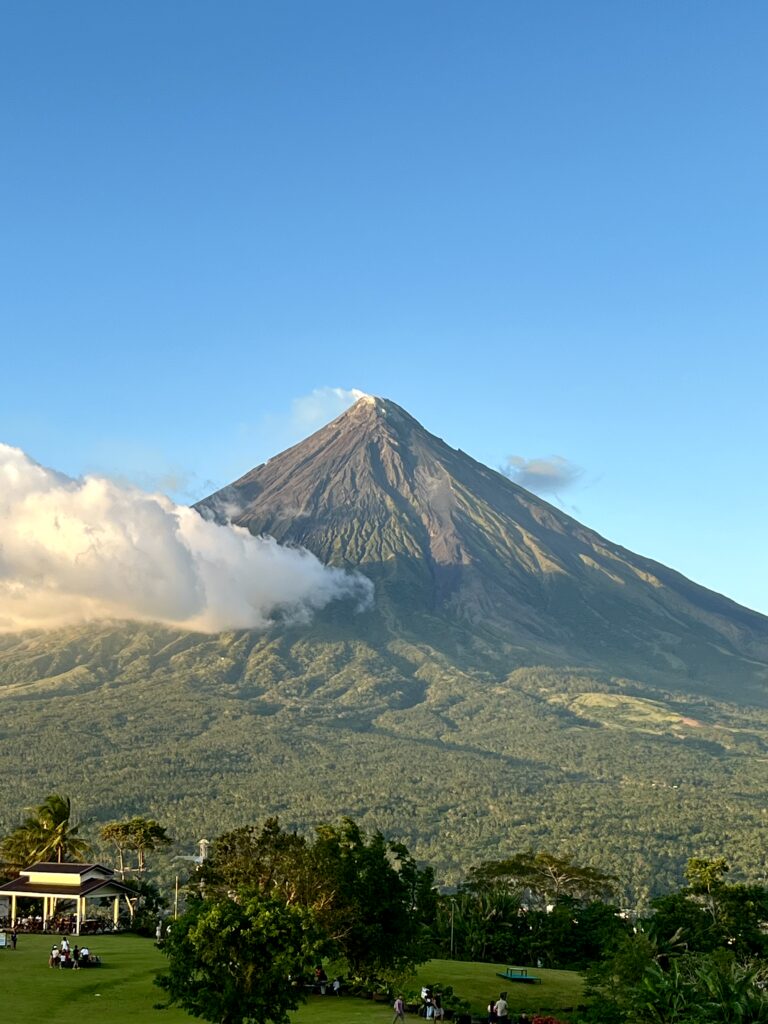
How can something so beautiful bring so much destruction?
This question swirled in my mind as I traveled through the province of Albay. Having caught my first glimpse of Mount Mayon from the window of our bus, I couldn’t help but gasp at how beautiful it looked even from a distance. And I was not the only one, everyone around me was captivated by her timeless beauty, immediately reaching for phones to take a quick snapshot. Watching countless TikTok videos prior to the trip, I knew how exquisitely beautiful Mount Mayon is, but nothing prepared me for the feeling of seeing her face to face.
I was simply blown away.
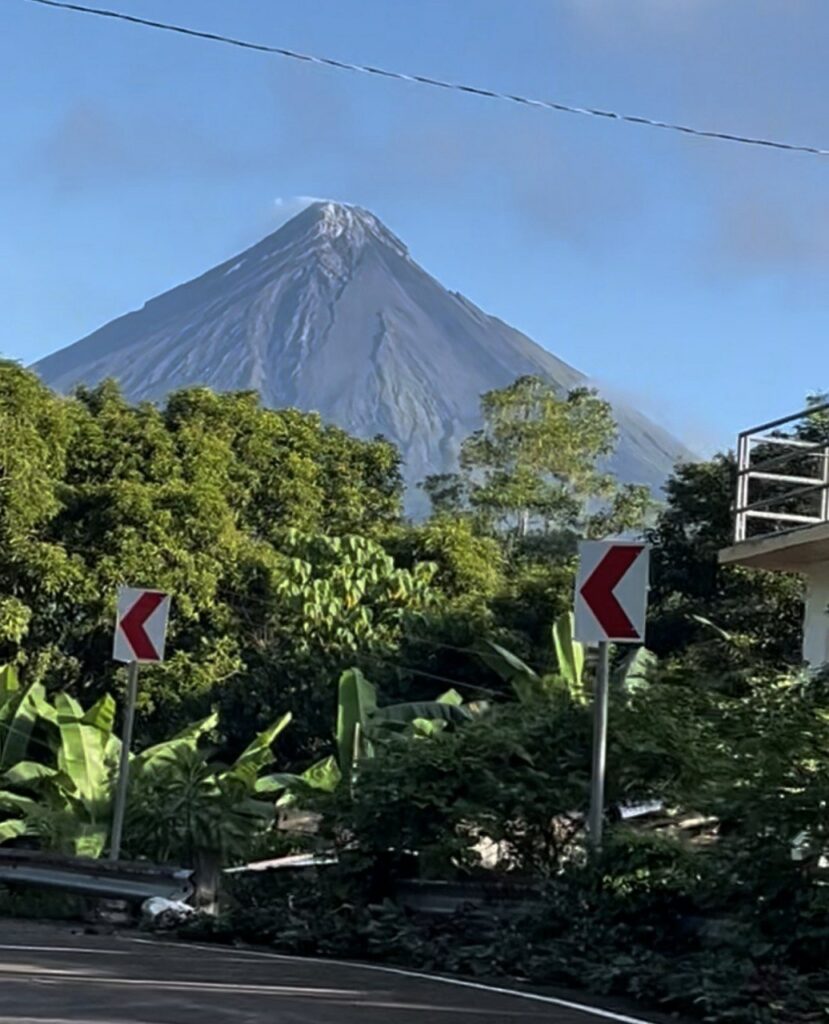
During the four-day trip, no matter how many times I saw Mount Mayon, I was always filled with immense awe and appreciation for her. From quick glimpses as we rode our motorcycle to Daraga Church, Quitinan Ranch, Cagsawa Ruins, and Farm Plate – Mayon stood firm with her majestic presence. Her beauty is the kind that grows on you the more you look at her. The kind that makes you quietly marvel at the mystery of nature’s creation.
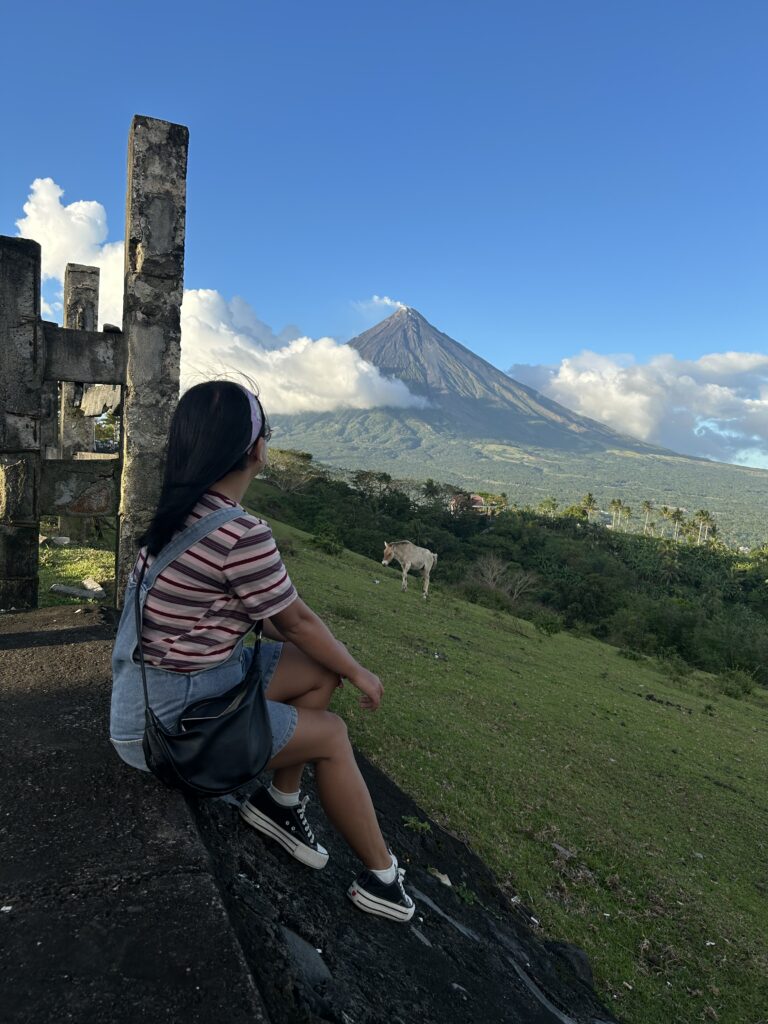
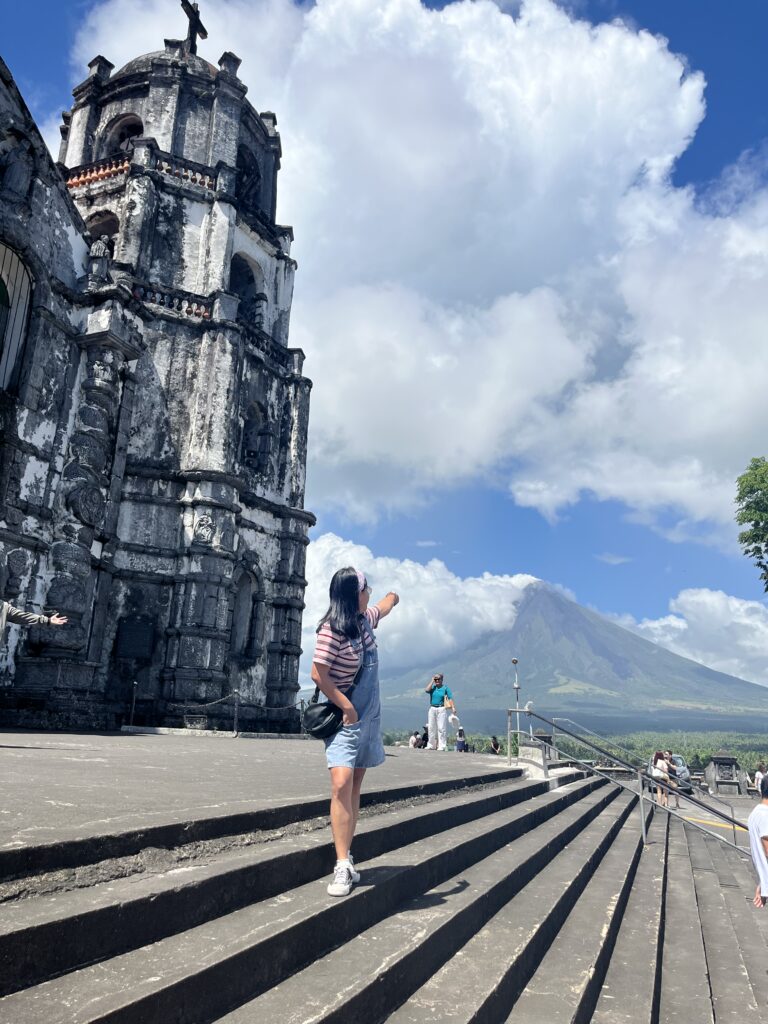
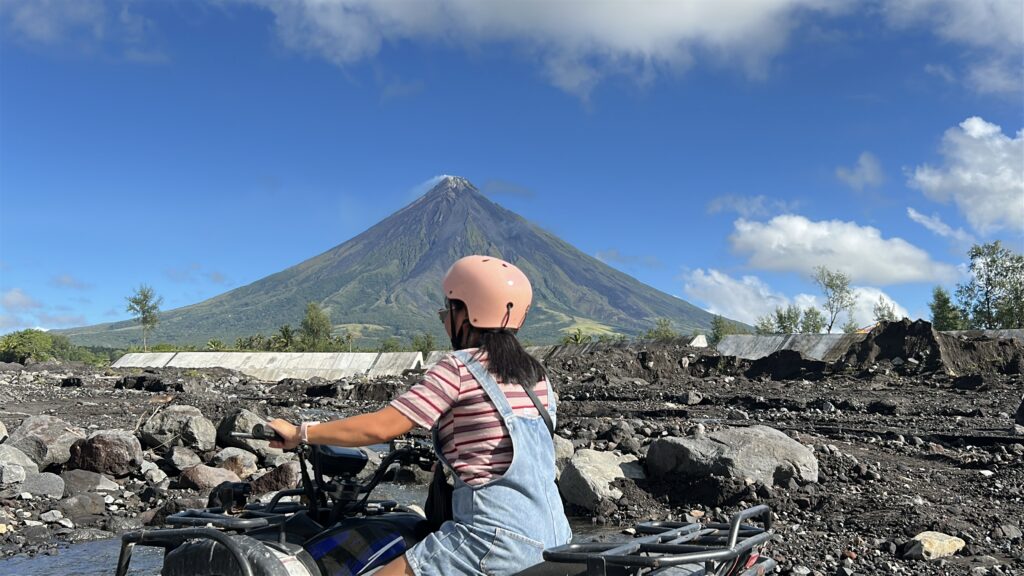
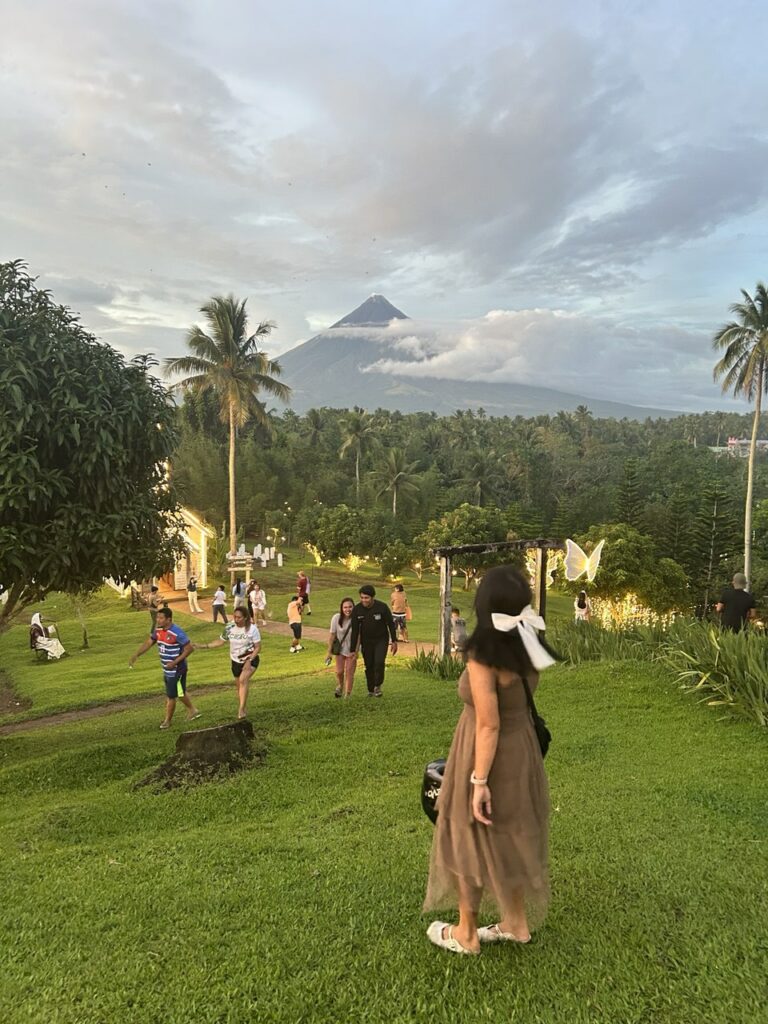
But the beauty of Albay wasn’t just because of Mayon. It was also found in the warmth of the community and the strength of its people. In Daraga Church, Ate Mayla – a vendor – easily offered to take photos for free. From the staff of the hotels to the drivers and residents of Bicol, I was met with warmth and friendliness.
Beneath this beauty, though, is a whisper of ruins.
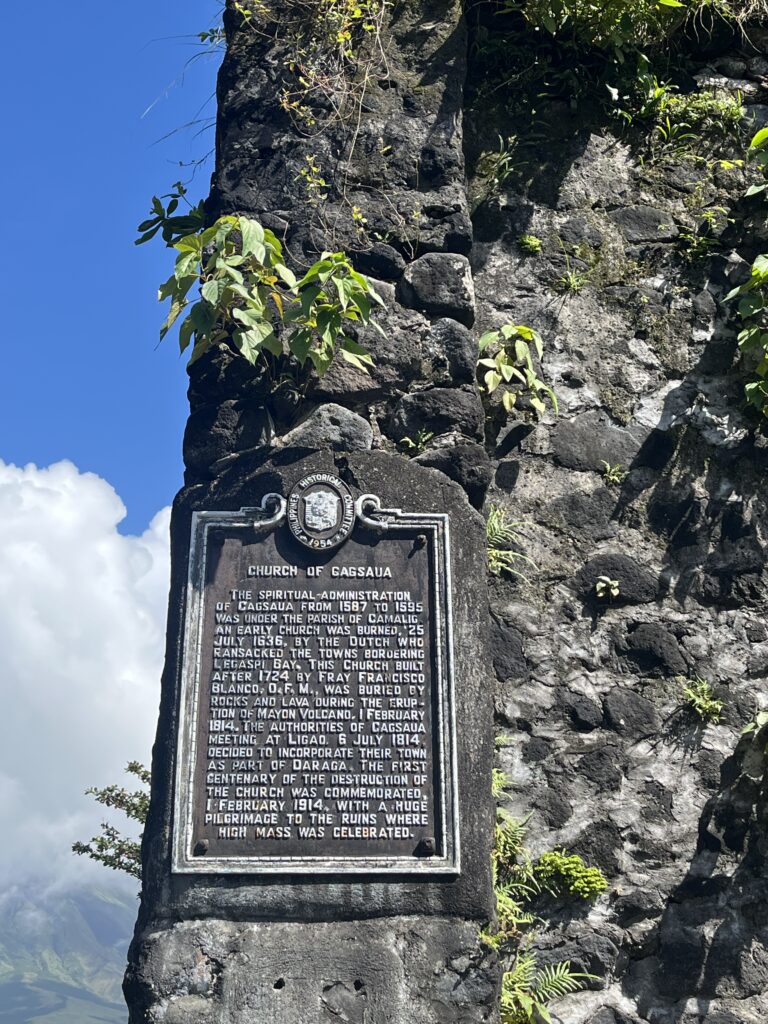
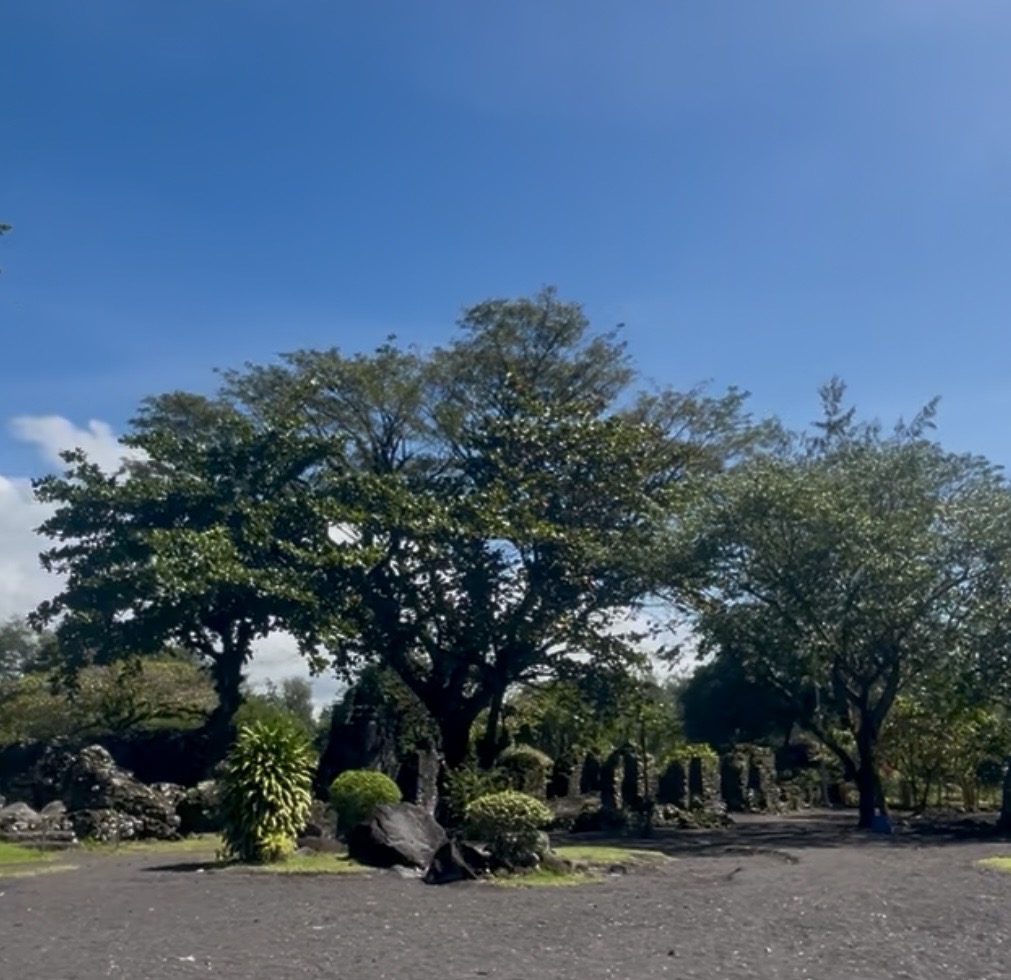
On February 1, 1814, Cagsawa was burned to ashes. It was such a devastating event that only the bell tower and a few walls of the church remained. I can only imagine the still, horrified faces of the people as it slowly dawned on them that the very mountain they admired—so grand, so serene—would also be the cause of their grief.
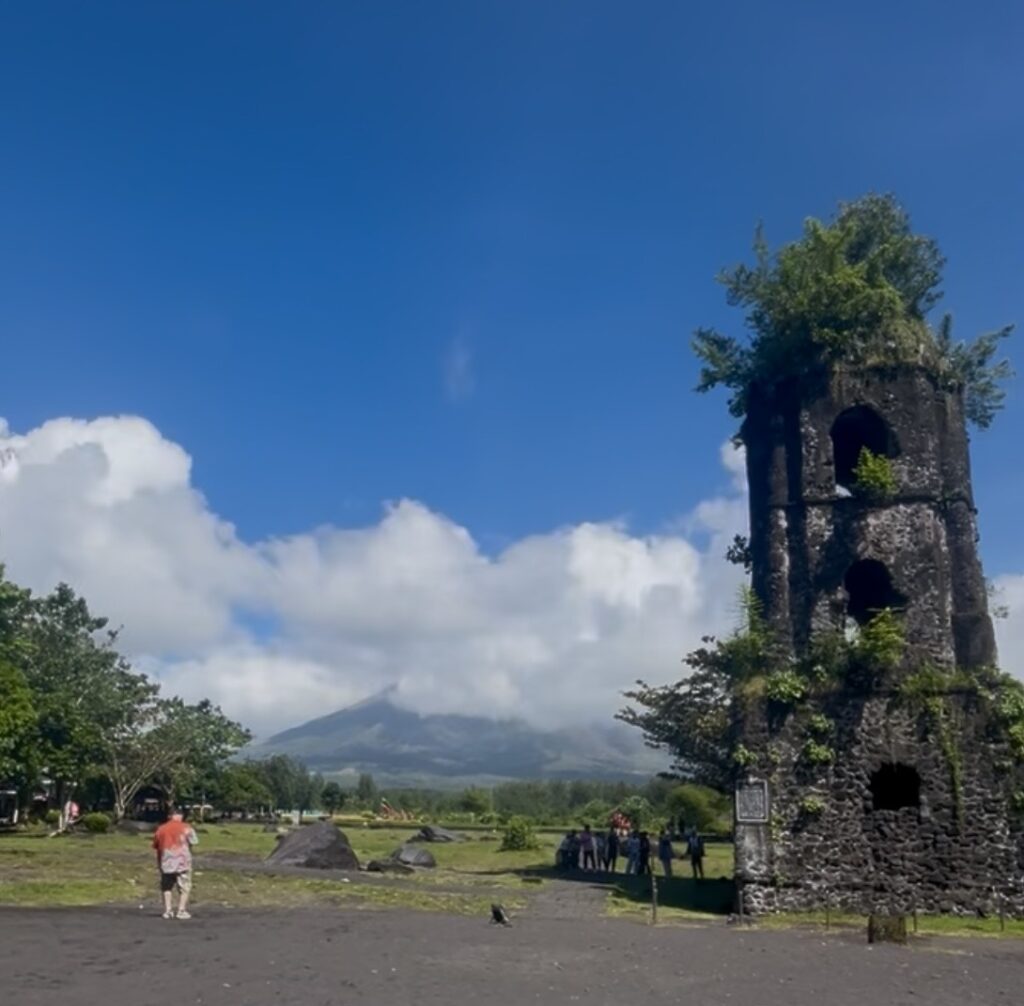
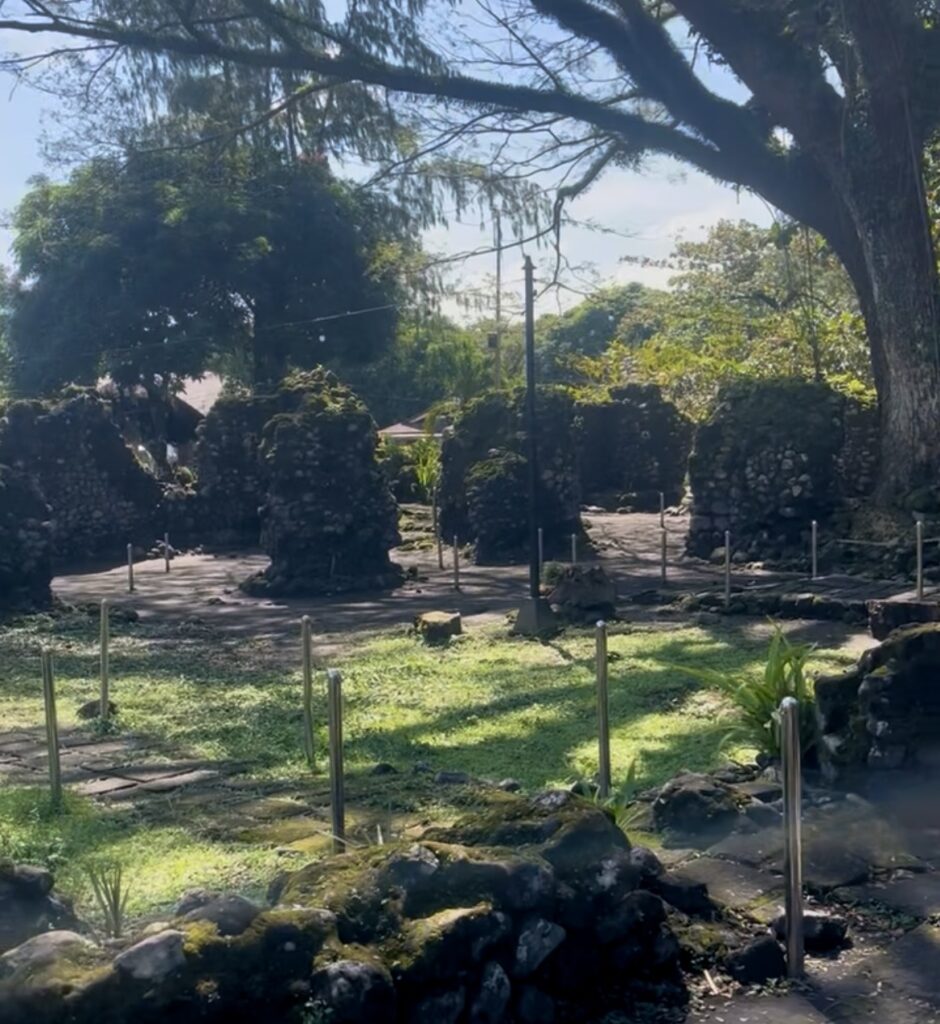
At Farm Plate, I was once again met with the juxtaposition of beauty and pain when I came across the small cemetery for departed pets. It was quiet, even peaceful, but the presence of loss was there – gentle but unmistakable. The cemetery showed not only the graveyard of the pets but also the photos with their loved ones and quotes that one couldn’t help but sigh in affection and pain.
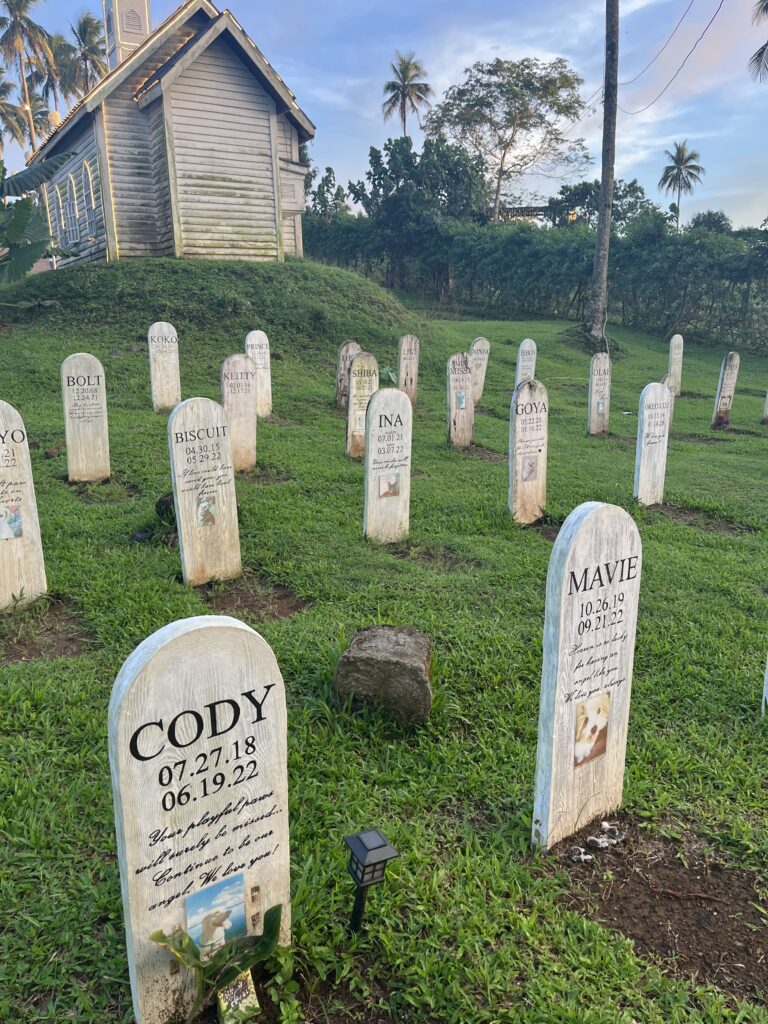
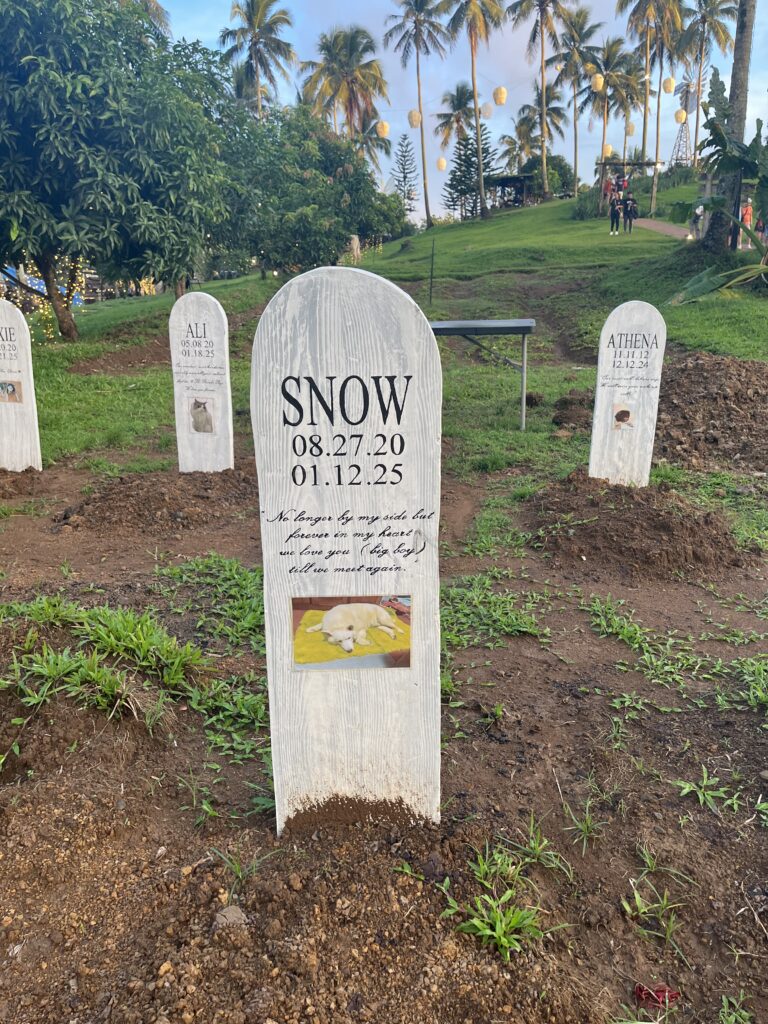
It’s the perfect image of love and loss.
I guess this contrast is also etched in the legend behind Mount Mayon. The tragic yet beautiful story of Magayon and Panganoron—lovers separated by death but immortalized in the form of this majestic volcano reflects that very tension. Their story is a reminder that beauty often springs from heartbreak, and that love, no matter how pure, carries within it the seeds of grief.
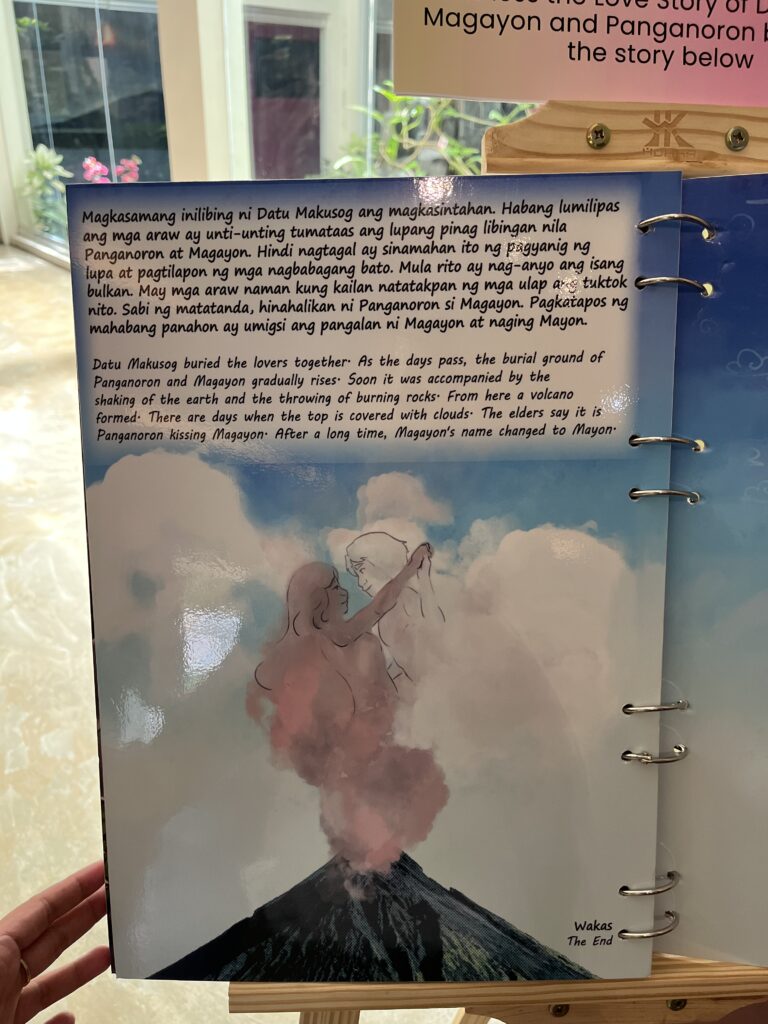
In many ways, love is like Mt. Mayon.
It gives us moments of unadulterated bliss—the joy of being seen, of slowly discovering another person, of being known and held in return. It stands tall and magnificent in our lives, filling us with wonder and gratitude. But love, like Mayon, is also capable of stirring the ground beneath us. It reminds us of our vulnerability. Just as Mayon can erupt without warning, love, too, can break us open, leaving behind ruins, silence, and ache.
Yet perhaps that is what makes it all the more real. The presence of such immense beauty does not negate the possibility of destruction. Just as pain does not erase the memory of joy.
Mt. Mayon stands as a powerful metaphor: beauty and loss often exist together. Every breathtaking experience carries a shadow of pain. Yet the same is also true—within every pain comes unadulterated bliss: majestic, grand, and ever-present.
Leave a Reply